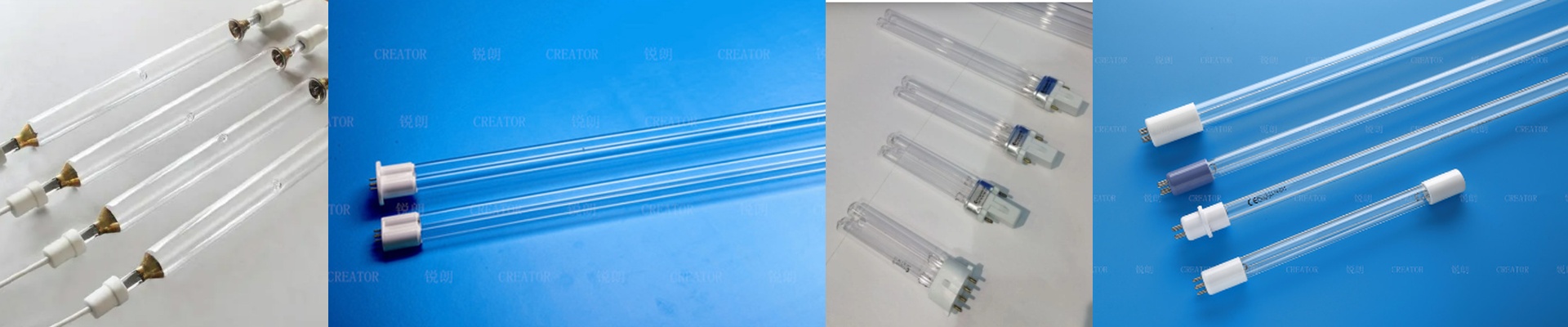
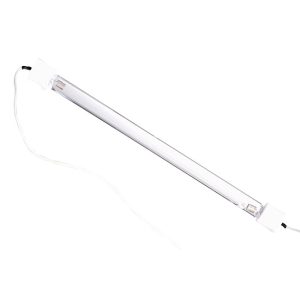
In pad and screen work, color drift isn’t just cosmetic—it’s a hard failure in spectral control. When the UV lamp’s output doesn’t match the ink’s photoinitiator absorption, curing becomes uneven across pigments. You end up with inconsistent cross-linking, pigment wetting that shifts, and a chromatic drift from the first piece to the last. What actually matters under the hood For UV ink drying, mercury vapor lamps need stable spectral output with strong UVA peaks. Most offset, pad, and screen UV inks are tuned to 365nm, backed by broadband UVA and controlled visible violet output. Spec lamps with a tight spectral distribution, high peak irradiance, and repeatable intensity along the arc length. Reflector geometry and dichroic coatings shape the spectrum and keep excess heat in check. Demand consistent output over life—measured as maintained irradiance and minimal spectral shift—so cure energy (mJ/cm²) stays repeatable, shift after shift. Here’s why it clicks in practice: when the wavelength matches the ink chemistry, you get predictable cure at the surface and through the film—no overcuring one pigment while another stays undercured. Dot gain stays steady, opacity holds, and Pantone matches repeat. Pair the lamp with a reflector set matched to the print area, and you cut cure-induced stress that can knock off gloss or hurt adhesion on curved or textured substrates. The process window opens up, scrap drops, and setups come faster because the lamp isn’t fighting the ink. A few shop-floor realities. Mercury lamps need the right ballast match, correct connector orientation, and controlled positioning to keep irradiance uniform. Reflector alignment tolerances are tight—get it off, and peak irradiance changes fast, sometimes showing up as banding. Make sure the lamp fits your press’s housing and cooling limits. If you’re running ozone-free, pick lamps with the right envelope materials and coatings, and still keep ventilation in place to manage substrate heat. And replace on a measured schedule—track output decay, not just calendar time.